
Nikos Stathakis
Lead guide·Kardamyli
Paddled this coast since he was twelve. Reads swell like a local; spots the resident monk seal before anyone else.
Half-day paddle from Kardamyli — sea caves, rock gardens, picnic on the pebbles.
Push off from St. John's harbour at 9:30 and trace a coast of limestone cliffs, sea caves and water clear enough to read the shadow of every fish.
Kardamyli sits on the Outer Mani, between the Messinian Gulf and the Taygetos — the snowline some years still visible from the kayak in April. The old customs at St. John’s fishing harbour is the put-in: a stone quay, a few caïques, the blue Prijons stacked on the pebbles. From the water the coast reveals itself slowly. Cliffs sculpted into rock gardens. Stalactite-roofed caves you duck into rather than paddle through. The Blue Cave, where a crack in the limestone throws a column of aquamarine light onto the seafloor — the trip’s quiet showpiece, and the reason we only run mornings.
The water here is honest. In May it is sixteen degrees and you’ll be glad of the spray-deck; by July it is warm enough to swim between caves without thinking about it. The wind is why we launch at 09:30 and not later. Mornings on this coast are glass; by midday the gulf breeze pushes in from the south-west and the swim stops get colder than they look from the harbour wall. Be back on dry stone for lunch in the village — the wind will have turned by the time the plates land.
Exact times shift with the season; your guide will confirm when you book.
Find Giorgos and the team at the stone quay in Kardamyli's fishing harbour — blue Prijon kayaks already laid out on the pebbles. Paperwork, kit fitting, and a short paddling brief on the beach.
 02
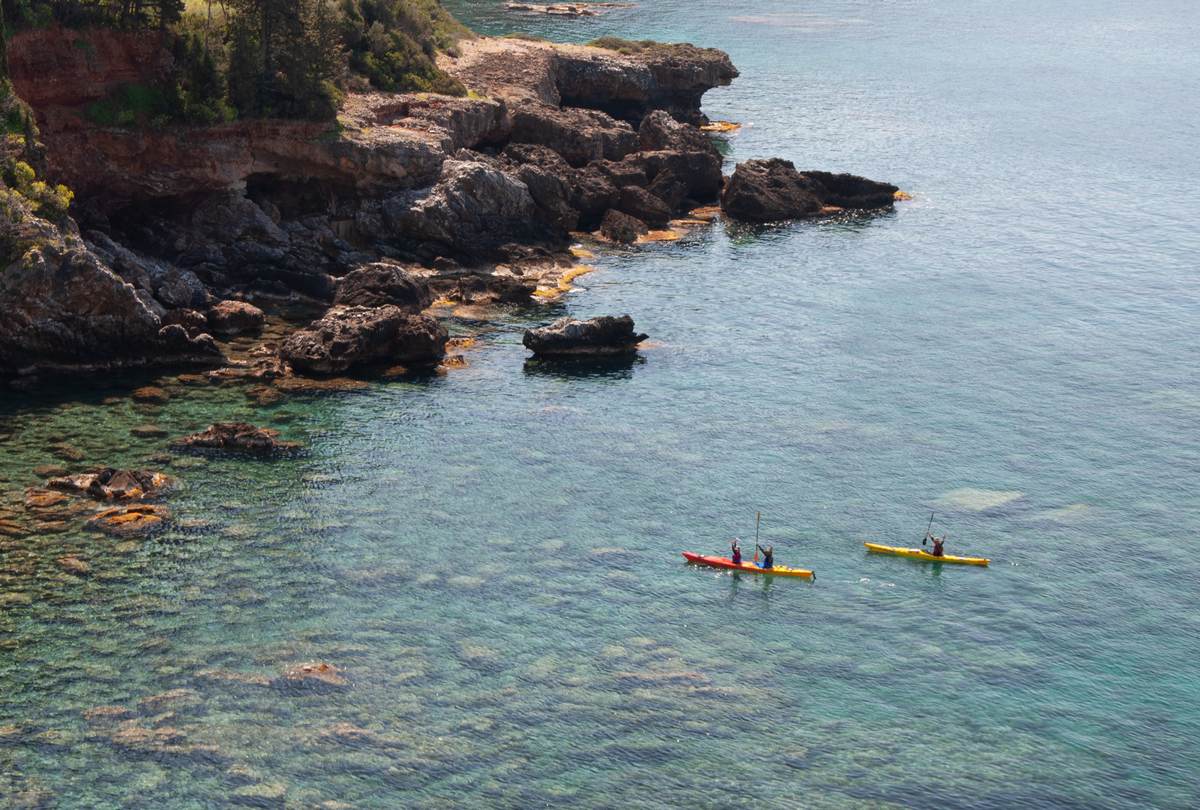
02Head south along the Outer Mani coast, hugging the limestone. Rock gardens, the odd cormorant, Taygetos rising behind you and — on a clear morning in May — still snow-capped.
 03
03Duck through the entrance and let the kayak drift. Sunlight comes through a crack in the rock and turns the floor of the cave aquamarine. This is the moment the trip turns on.
 04
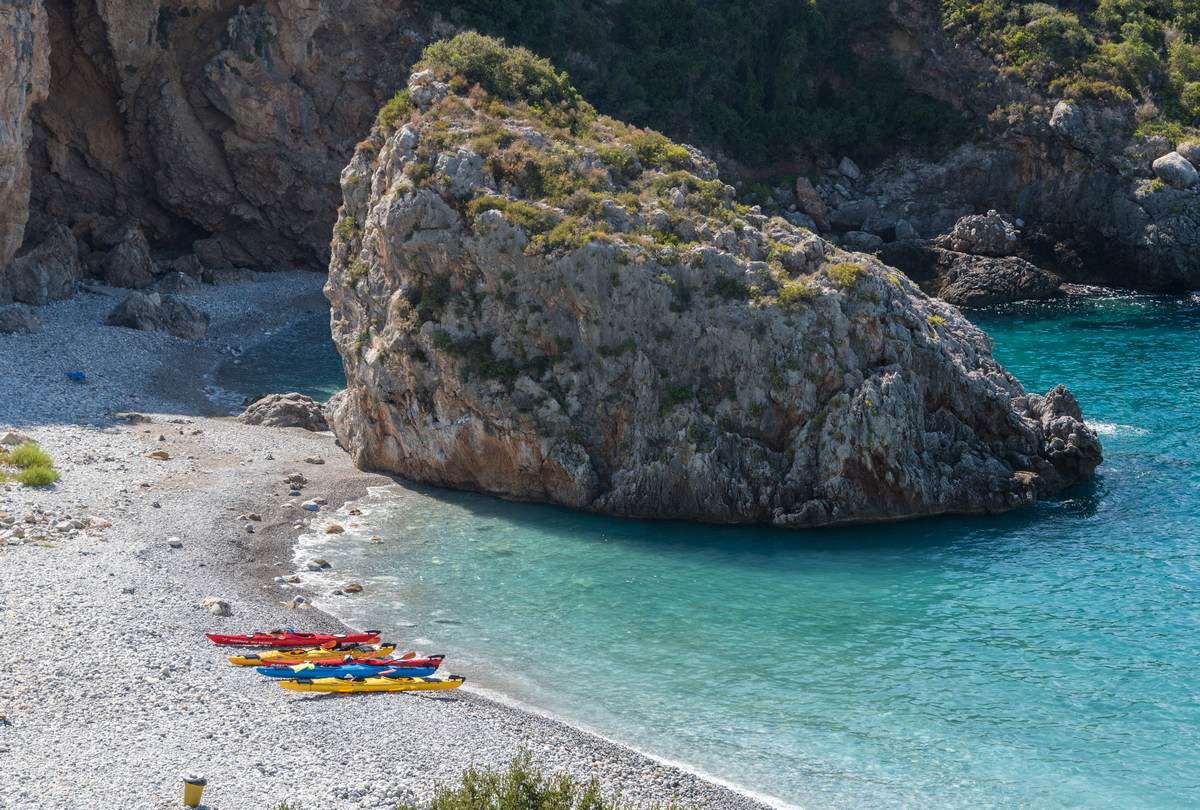
04Pull in to a cove only reachable by water. Freshly baked bread, garden vegetables, koroneiki olive oil, local cheese, seasonal fruit — eaten slowly on the stones.
 05
05A long swim off the boats, then the paddle back to Kardamyli before the wind picks up. Keep an eye out — loggerheads surface on this stretch in summer.
 06
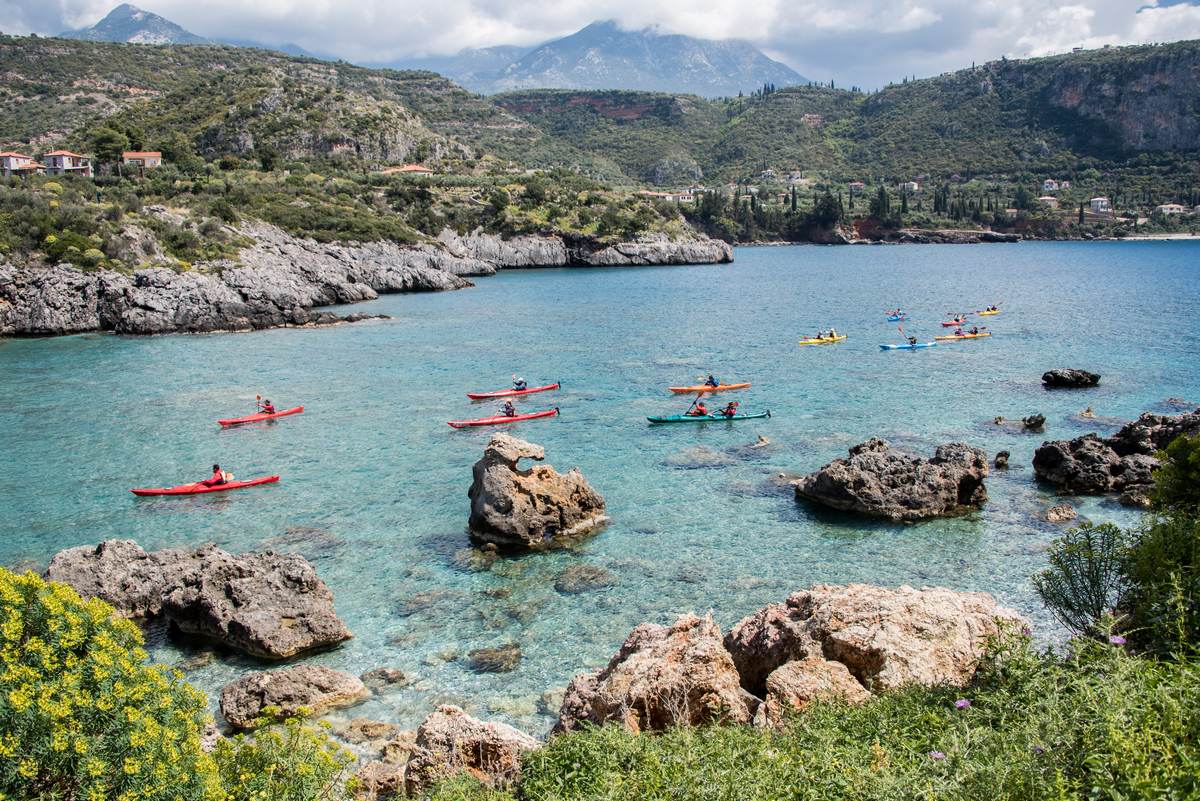
06Land at St. John's, rinse the kit, and walk into the village for a long lunch. Trip photographs are sent through later in the day.
Paddled this coast since he was twelve. Reads swell like a local; spots the resident monk seal before anyone else.
Marine biologist by training. Leads the snorkel stop and translates the seabed — seagrass, urchins, the lot.
Eight years running safety boat across the Messinian gulf. Calm, methodical, fluent in three languages.
Most of our paddlers haven’t. The sit-on-top kayaks we use are wide and very stable — if you can swim and hold a paddle, you can do this trip. Before we leave the harbour, your guide spends fifteen minutes on technique and the safety brief. By the first headland you’ll have the basics.
Swimwear under quick-dry shorts and a t-shirt is the basic kit. Add a hat, sunglasses with a retainer strap, and reef-safe sunscreen. Skip running shoes and socks — they get soggy and cold. Sea shoes, sport sandals, or flip-flops are right. In April and October, bring a thin fleece or synthetic base layer; the water is colder than it looks. We provide dry bags for phones and wallets.
Yes — it’s one of the trips we run most often with families. The kayaks are stable enough for a parent and child to paddle as a tandem, and the route is sheltered and easy to break up with swim stops. Children eight and over can paddle their own single kayak; younger kids ride in the front of a tandem. We offer family rates on request.
Five years old, paddling tandem with a parent. Children eight and over can take their own single kayak. We pace family trips to suit the youngest paddler, with frequent swim and snack stops.
Local paddlers certified by British Canoeing as Sea Kayak Leaders, all carrying current first-aid certificates. They grew up on this coast — they read the wind and the swell before they read the forecast, and they know which cove the seals use in May.
Yes. Halfway through the paddle we land at a quiet beach for a picnic — freshly baked bread, organic vegetables and fruit from local gardens, our own olive oil, and Messinian cheese. It is a proper stop, not a snack on the kayak.
We watch the forecast for two days before each trip. If the wind or swell makes the coast unsafe, we either move the paddle to a different day in your stay, or refund in full — your choice. Light rain on flat water is not a problem; we still go.
Small groups (max 14), human-powered, no engines and no wake. We carry out everything we carry in, including other people's litter from the picnic coves. The kayaks are Prijon plastic — heavy, scuffed, repaired rather than replaced; the boats you paddle have been on this coast for years.