Living Culture · 8 days · 7 nights

Olive harvest in Messinia

Eight days in Messinia and Mani at koroneiki harvest — mills, kitchens, kafenia.

8
Days
4–14
Group size
€1,680
From
Trip overview

Eight days in Messinia and the Mani during koroneiki harvest — mills, long lunches, village tables.

We built this trip around the smell of a working olive mill in november. Eight days in Messinia and the Mani when the koroneiki trees are heavy, the nets are down under every grove from Kalamata to Areopoli, and the village kafenia are full again because the summer rentals have shut. The harvest is not a performance laid on for visitors — it is the reason the year turns. We walk into it sideways: a morning at a family mill outside Kalamata, an afternoon picking with a producer who has thirty trees and an opinion about everyone else’s oil, a long lunch that turns into coffee that turns into tsipouro.

The Mani over the Cyclades for travellers who want Greece in a wool jumper rather than a swimsuit. We run this in late october through early december because that is when the work is happening and the light is honest — low, gold, short. Days are unhurried by design. One activity in the morning, one slow meal, an afternoon that belongs to you. The honest warning: it rains. Greece in november is not the postcard, and the road over the Taygetos can close for a morning when the cloud sits low. We plan around it; we do not pretend it doesn’t happen.

One base for the whole week — seven nights in a four-star hotel in Kalamata, no daily repacking, no half-hour drives at midnight. The Mani days are day-trips because they have to be: the hotels down there are shuttered in november and every set of hands in the villages is in the groves. Eight days, seven nights, small group of four to fourteen.

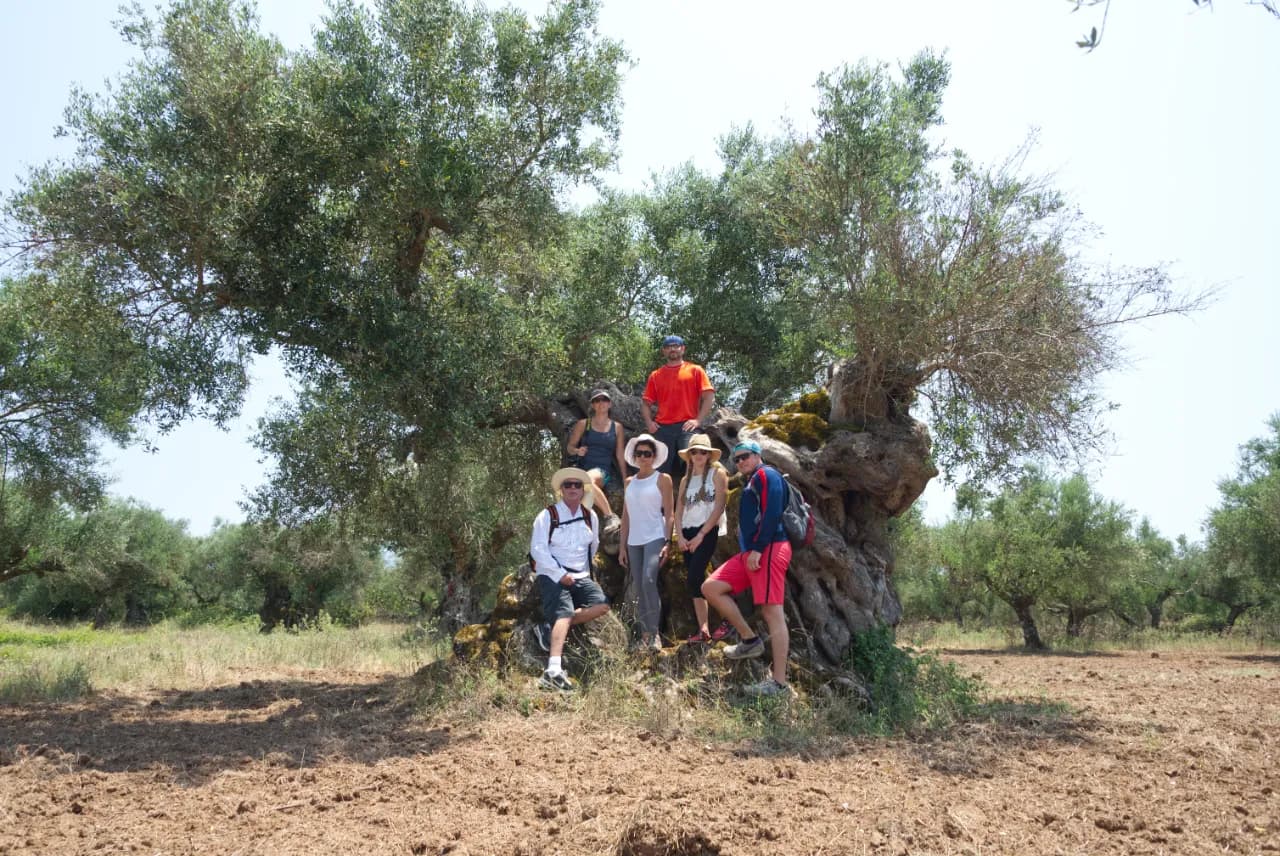
The new oil is green, peppery, almost fizzy at the back of the throat. November is the month to eat it raw, not just cook with it.Fotis Gkonis — Cycling guide & Olive oil producer
Why this trip

What sets it apart.

Press day at a working mill

A morning inside a family koroneiki mill at full harvest tilt — the scrape, the centrifuge, the first pour of oil still warm enough to fog the glass.

Pick with a Maniot grower

An afternoon in the koroneiki groves outside Kalamata with a small grower, hand-picking into the nets and milling the fruit within four hours — the reason the oil tastes the way it does, and the reason your back will know about it tomorrow.

Long lunch in a kafeneio

A three-hour midday table of syglino, horta, lalangia and new oil with bread, in a village kafenio that mostly feeds locals.

Olive oil tasting from the best

A morning at a mill outside Androussa with Dimitra. You taste four oils side by side and learn to spot the faults — the musty one from late-picked fruit, the flat one from oxidised stock, the rancid bottle that's been open since Easter. The good ones bite at the back of the throat. Skip the supermarket shelf for the rest of the week.

Rest day or hands on cooking class

A day off the harvest rhythm. Sleep in, swim at Kalamata's east end before the wind, or pull on an apron with Eleni in her Verga kitchen — kayianas with the morning's tomatoes, lalangia twisted and fried in koroneiki, syglino from the Mani cured the old way. You cook, then you sit down and eat what you cooked. Three hours, minimum. Skip the hotel breakfast that morning — you'll want the hunger.

The route

The shape of the trip.

Total distance
29 km
cumulative
Climbing
+650 m
cumulative
Descending
650 m
cumulative
Days riding
4
stages
Day by day

8 days at a slow pace.

8 days at a slow pace.

Arrival
Arrive

Arrive in Kalamata, settle by the sea

Athens or Kalamata airport → Kalamata seafront

Transfers from Athens or Kalamata airport bring the group to the Kalamata seafront in the late afternoon, when the light off the Messinian Gulf goes the colour of brass. The hotel sits on the promenade — a short walk to the old town and the central plateia, where the kafenia start to fill from six. Welcome dinner in a working koutouki near the Pantazopoulos mill: mezethes, horta, the first pour of new koroneiki oil on bread, and the cook explaining what is on the table tonight and what isn’t, because it is november and not july. Early night — the mill day starts at eight.

Half-dayDuration
Overnight in Kalamata
Day 2
02

Hike Between Wetlands, Castles & Olive Fields

Kalamata → Gialova Lagoon

After breakfast a forty-five-minute drive west to the Gialova lagoon, one of the last working stops on the Africa-Eurasia flyway. A flat loop along the reed paths — herons, kingfishers, and in autumn the flamingos still wading the shallows — before the track climbs to Paleokastro, the thirteenth-century fort above the Bay of Navarino. From the ramparts the curve of Voidokilia is laid out like a drawing. The route is firm sand, single-track, and a few rocky steps near the top; trainers are fine, sandals are not. If the sea is honest there is a swim at Voidokilia on the way down — go before eleven, the car park fills fast and the dune path is narrow.

Lunch is a picnic under the olives at the edge of the wetland — bread baked that morning, sheep’s cheese, tomatoes, olives, and the new-season koroneiki oil poured over everything. The guide tells the bay in two dates: Nestor in the Odyssey, and the 1827 sea battle that finished the Ottoman fleet and unfinished modern Greece. The grooves on the path up to the fort are older than either.

Back in Kalamata by mid-afternoon. The evening is loose — the central market is worth an hour before it shuts, the promenade walks itself at sunset, and the small mezethes places behind Aristomenous open around eight. Skip the seafront tavernas with laminated menus. Kanellos for the grilled fish, Krasopateras for the inland Messinian cooking and a carafe of the house red.

Full dayDuration
8 kmDistance
+150 mClimbing
150 mDescending
Overnight in Kalamata
Day 3
03

Harvest and Press day at a Messinian mill

Kalamata → Pantazopoulos / Asprochoma area mill → village taverna

By 8 the nets are spread under the trees at a family grove fifteen minutes out of town — koroneiki, the small bitter olive that gives Messinian oil its pepper. Harvesters work in pairs, one on the comb, one steadying the net. Take a comb if you want the ache in your shoulders by lunch, or sit on a stone wall and watch — both are honest answers. Between rows the grower talks through what matters: terracing, the dacus fly, why September rain is the worry, how a dry August concentrates the phenolics that catch at the back of your throat.

Lunch happens under the trees. *Horta* from the verges, an omelette with wild greens, grilled courgette, tomatoes that taste of the soil they grew in, bread torn into a saucer of that morning’s oil.

Late morning the fruit goes to a modern mill nearby — stainless, cold, loud. Crates in, leaves blown off, the wash, the malaxation paddles turning the paste, the centrifuge spitting oil one side and pomace the other. Then the tasting: blue glasses so colour can’t trick you, an apple slice between samples. Once you’ve tasted a rancid sample you’ll never buy supermarket oil again without sniffing the cap.

Back in Kalamata by mid-afternoon. The light on the seafront is best around 5 — walk it before dinner, the *plateia* fills slowly.

Full dayDuration
Overnight in Kalamata
Day 4
04

Walk Among Ruins and Millennial Olives

Kalamata → Ancient Messini → Andromonastiro

Ancient Messene is the one to do properly. Bigger than Olympia, emptier than Mycenae, and in november the site opens at 8 and stays ours until the Kalamata school groups arrive around 11 — so we leave the hotel at 7.30 and walk the Arcadian Gate first, where the chariot ruts are cut deep into the threshold stone. Then the stadium, the bouleuterion, the Asklepieion. Two hours on foot, slowly, with the Taygetos behind us and the valley dropping away to the west.

From Messene the road climbs ten minutes to Andromonastiro, a Byzantine fortified monastery folded into the hillside above the Petralona valley. The frescoes inside the katholikon are 13th-century and largely intact; the courtyard is shaded by a single enormous plane tree. Zoodochos Pigi sits a short walk further on, smaller, quieter, usually unlocked.

The afternoon is the olive walk. Vangelis, who farms the grove next door, takes us through grafting cuts, the dry-stone terraces that hold the soil after winter rain, the cisterns that feed the older trees, and the argument between the traditional koroneiki groves and the high-density plantings creeping up from the plain. Lunch is laid on a board under the trees — village bread, tomatoes still warm from the vine, fresh mizithra, a jar of bitter-orange spoon sweet to finish. Back in Kalamata by four. The seafront is the walk for the evening; the wind off the gulf turns cold once the sun drops behind Koroni, so take a layer.

Full day Duration
8 kmDistance
+200 mClimbing
200 mDescending
Overnight in Kalamata
Day 5
05

Rest, Adventure, or Culinary Discover

Kalamata

Day 5 is the hinge — deliberately unscheduled. By now the harvest rhythm has set in, and a flexible day mid-week is what keeps the back from seizing and the appetite honest. Sleep in. Walk the Kalamata seafront before the heat. Read on the balcony until lunch.

For those who want to move, there are four shapes the day can take. A sea kayak along the Messinian coast, launching early before the wind. An e-bike loop through the olive valleys north of town, slow enough to stop at the mills still pressing. A cooking class in a village kitchen — kayianas for breakfast, lalangia twisted and fried, the koroneiki oil poured generously because it’s the week it’s pressed. Or the city itself: the Wednesday market on Aristomenous, the spice shops behind the church, the long promenade out to the marina.

Your guides will arrange whichever you want the night before. Dinner is on your own — Krini for seafood near the old harbour, or one of the wine bars on Salaminos for Mantineia by the glass and a plate of mezedes.

The other job this day quietly does: it’s the buffer. If heavy rain ruins a morning earlier in the week, or a mill closes unexpectedly, we shuffle the programme into this slot and lose nothing. Greece in November rewards the itinerary that bends.

Full dayDuration
Overnight in Kalamata
Day 6
06

A slow day in Kardamyli

Kardamyli — Vyros Gorge mouth and harbour

The drive south from Kalamata takes about 45 minutes — Kambos, the cypresses thinning, the dry-stone walls taking over — and lands in Kardamyli mid-morning. From the old village the *kalderimi* climbs west into the Vyros foothills, linking the tower-hamlets of Petrovouni and Exochori through olive terraces that have been worked the same way for two hundred years. 8 kilometres on cobble and earth, moderate ascents, the Taygetos on one shoulder and the Messinian Gulf on the other. The stones underfoot were laid before the road existed. Lunch is a picnic under the olives — *paximadi*, ripe tomatoes, local cheese, *syglino*, fruit, bread for the oil — eaten *sigá-sigá* with the walk still in the legs. On warm afternoons there is a swim at Foneas, the small pebble cove south of town with the rock you can jump from; Delfinia is the alternative when the wind is up. Skip the harbourfront tavernas in Kardamyli for lunch, most of the owners are at their Olive grooves — they are fine, not better than fine, and the picnic is the point. Back in Kalamata by late afternoon, the evening is yours: seafood at the port, or the modern Messinian kitchens in the old town.

Half-day walk, free afternoonDuration
8 kmDistance
+200 mClimbing
200 mDescending
Overnight in Kalamata
Day 7
07

Polylimnio Waterfalls and Traditional Oil Tasting

Kalamata → Polilimnio → Androussa

The morning starts west of Kalamata — a 35-minute drive to Polylimnio, where a chain of pools sits in a gorge shaded by plane trees. The path is an out-and-back of 4–6 kilometres, stream-bed underfoot, rocky steps, the occasional metal handhold bolted into limestone. Wear shoes that can get wet. The swim at Kadi, the largest pool, depends on the week’s rain and the cold of the water — judge it on the day. Walking back, the guide explains why karst country and koroneiki belong together: the same fractured limestone that drains the pools feeds the roots of the trees we’ll taste from next.

From the gorge it’s a short drive to Androussa, where Dimitra runs a stone mill. The tasting is structured: a green, peppery early-harvest oil from October fruit against a softer late-pick from December, on paximadi, with tomatoes and a local graviera. Dimitra will show you how to read a label — harvest date over “extra virgin”, acidity numbers, why a dark bottle matters. Lunch is laid out on the millhouse table — horta, bread, the cheeses from the tasting, slow-cooked lamb.

Back in Kalamata by mid-afternoon. Skip the seafront tourist tavernas for the farewell — we eat at a koutouki in the old town, the kind where the menu is what the cook bought that morning. Pack tonight if you can.

Full dayDuration
5 kmDistance
+100 mClimbing
100 mDescending
Overnight in Kalamata
Departure
Depart

Kalamata to Athens - Departures

Kalamata → Athens airport

By late october the direct flights out of Kalamata have thinned, so most travellers route home through Athens. The drive is around two and a half hours dry, closer to four if november is throwing weather at the Corinth coast — leave a buffer if your flight is the same afternoon. Kalamata airport runs Athens-only in low season, so most travellers transfer to ATH. Pack you tin of the unfiltered oil from this week’s pressing. It will taste of grass and pepper for about six weeks, then settle. Open it the first Sunday you’re home, pour it on bread with salt, and you’ll be back at the mill at four in the morning — the smell of crushed koroneiki, Stavros laughing at someone’s slow stirring, the lights of Kalamata still on across the gulf.

Half-dayDuration
Departure
What's included

Everything except the flight and the calories.

Accommodation

Seven nights in 4-star hotels — in Kalamata center.

Meals as listed

Daily breakfast, four long lunches with producers and in village kafenia, three dinners including the welcome and farewell tables.

Producer visits

A working koroneiki mill in Messinia, a small Inner traditional old Mani press, a half-day picking with a hand-harvest grower an olive oil tasting with a specialist.

Cook day

A full day in a home kitchen in the Messinian foothills, market to table, with tsipouro from the family still.

Transfers and transport

Airport transfers from Athens or Kalamata, all in-trip transport in a private vehicle with a Greek-speaking driver.

Local guide

An English-speaking guide from the Mani throughout, plus the producers and cooks who host each day.

Not included

  • International and domestic flights
  • Travel insurance (required)
  • Meals not listed in the daily itinerary
  • Drinks beyond what is poured at producer tables
  • Tips for guides, drivers and hosts
Stay & eat

Two bases, seafront and harbour

Four nights in Kalamata at a 4-star hotel on the seafront promenade — the kind of place where the breakfast is generous, the walls are soundproof enough, and the upper rooms look out at the gulf rather than the car park. From the door it is a fifteen-minute walk to the old town and the central plateia, and a five-minute walk to the working end of the harbour where the Pantazopoulos mill is.

Three nights in Kardamyli at a 4-star harbour-side hotel where the upper floors carry the morning light and the lower floors carry the sound of the waves at three in the morning, depending on the wind. The honest note: 4-star in the Mani in november is not 4-star in Mykonos in august. The sheets are good, the heating works, the wifi is fine, and the owner remembers your coffee on the second morning. That is what the rate is buying.

On the table

New oil, slow tables, real kitchens

This is a trip of long lunches more than big dinners. The food in november in Messinia and the Mani is what the year has actually grown — horta from the hillside, syglino from the smokehouse, the new koroneiki oil poured generously because the harvest is in. We eat at the producers’ tables when the work allows, and in village kafenia when it doesn’t. The cook day in the foothills is the centrepiece of the eating week — a home kitchen, a copper tsipouro still, a table that doesn’t end on time.

What the trip will not pretend: not every meal is a revelation. There will be a competent Greek salad and a serviceable plate of grilled fish, and a tiropita that is fine. Greek food in november is honest — root vegetables and pulses do a lot of the work, and the tomato is a memory. We lean into the season rather than apologising for it.

Breakfast
Hotel breakfast — yoghurt with thyme honey, paximadi, hard-boiled eggs, the new oil on bread, strong coffee from the cezve.
Lunch
Long table at a foothill kafenio after the mill visit — syglino, lalangia, horta from the hill, the first new koroneiki poured from an unmarked bottle.
Dinner
Home-cook day farewell in a Messinian village kitchen — kayianas, slow-cooked goat, the family's tsipouro from the still in the courtyard.
Getting there

Three ways to land in Kalamata.

Meeting point is Athens (ATH) or Kalamata (KLX) Airport.

  • Fly to Athens or Kalamata

    ATH has full international service year-round. KLX runs a reduced winter schedule — check before booking the flight in.

  • Private minibus throughout

    All transfers and day movements are in a private vehicle. No self-drive required, no rental car logistics.

  • On foot in the villages

    Short walks on kalderimi paths around Kardamyli and through the Vyros gorge mouth. Sturdy shoes, not boots.

Rates & dates

How it's priced.

Rates are per person, twin share, based on a group of four to fourteen. A single supplement applies for solo rooms and is quoted on request — it is real money in november because hotels do not discount the upper floors. A 25% deposit holds the booking, balance due eight weeks before departure. The rate covers everything listed under inclusions; what is not included is listed plainly above so the final bill matches the website.

We run this trip from late october through mid december, when the harvest is actually happening. Dates outside that window are not this trip.

Make it yours

Tailor this trip to fit your group.

Yes to dates within the harvest window — late october through early december — and yes to swapping the Inner Mani day for a second mill if your group cares more about oil than towers. Yes to private departures for groups of four or more. Maybe to extending into Monemvasia at the end if the weather is kind. No to running this in summer; the trees are not in fruit and the kitchens we use are closed or full of tourists. No to under-tens — this is a trip of three-hour lunches, not a family week.