The 6.3-km cut through the limestone isthmus that Nero began, a French company resumed in 1882 and a Greek company finished in 1893 — near-vertical walls up to 79 metres high, dramatic to walk over, brief to visit.
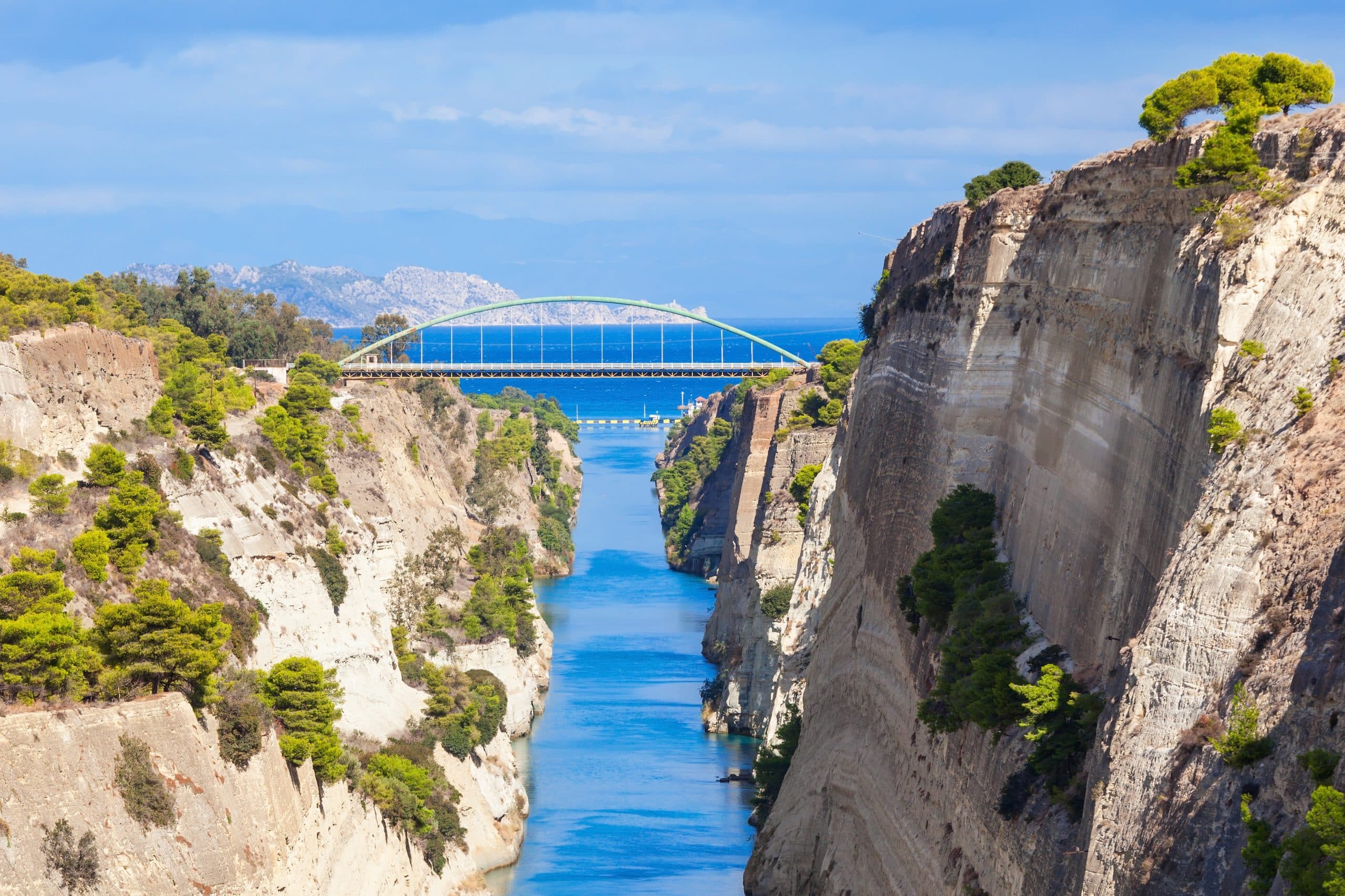
The Corinth Canal is the most photographed engineering feat in Greece — a perfectly straight, perfectly vertical cut through the limestone of the Isthmus of Corinth, opened in 1893 after twenty centuries of attempts.
The idea is older than Christ. Periander of Corinth (7th c. BC) was the first to attempt it; Demetrius Poliorcetes (3rd c. BC) tried; the Roman emperor Nero began the work himself in AD 67, swinging the first pickaxe and putting 6,000 Jewish prisoners to the dig. He died the next year, and the work stopped with him. A French company began the modern cut in 1882; when it went bankrupt, a Greek company took over in 1890 and finished it in 1893 — 6.3 kilometres long, 21 metres wide at the bottom, with walls rising up to 79 metres above the water. It is too narrow for modern cargo shipping (most cruise ships and freighters cannot fit) and is now used mainly for tourist boats, yachts, and the bungee jump from the road bridge. The classic visit is twenty minutes: park at the rest area on the old national road; walk onto the road bridge for the long view down the cut; watch a boat pass; have a coffee at the bridge café. The site is free, never closed. Combine with anything else in Corinthia — most travellers stop on the way between Athens and Ancient Corinth.
A canal stop on the drive south.
Free rest area on the old national road.
Five minutes to the centre, long view down the cut.
Around forty transits a day when the canal is open — it reopened to shipping in June 2026 after years of landslide repairs — so one every half-hour or so in season.
Greek frappé and a koulouri.
Twenty minutes south-west.
Within twenty-five minutes.
Twenty minutes south-west. Detail on the Ancient Corinth page.
Twenty-five minutes south-west. Detail on the Acrocorinth page.
Ten minutes north — spa town. Detail on the Loutraki page.
Ten minutes south-east — the sanctuary of Poseidon and a small museum (€5, closed Tuesdays).
Tell us a little about the trip you want — pace, who's coming, how you'd like to spend your mornings. We'll build the days.