A medieval Frankish castle and a Byzantine ghost-village above the eastern Eurotas — like a smaller, quieter Mystras, with almost no other visitors.
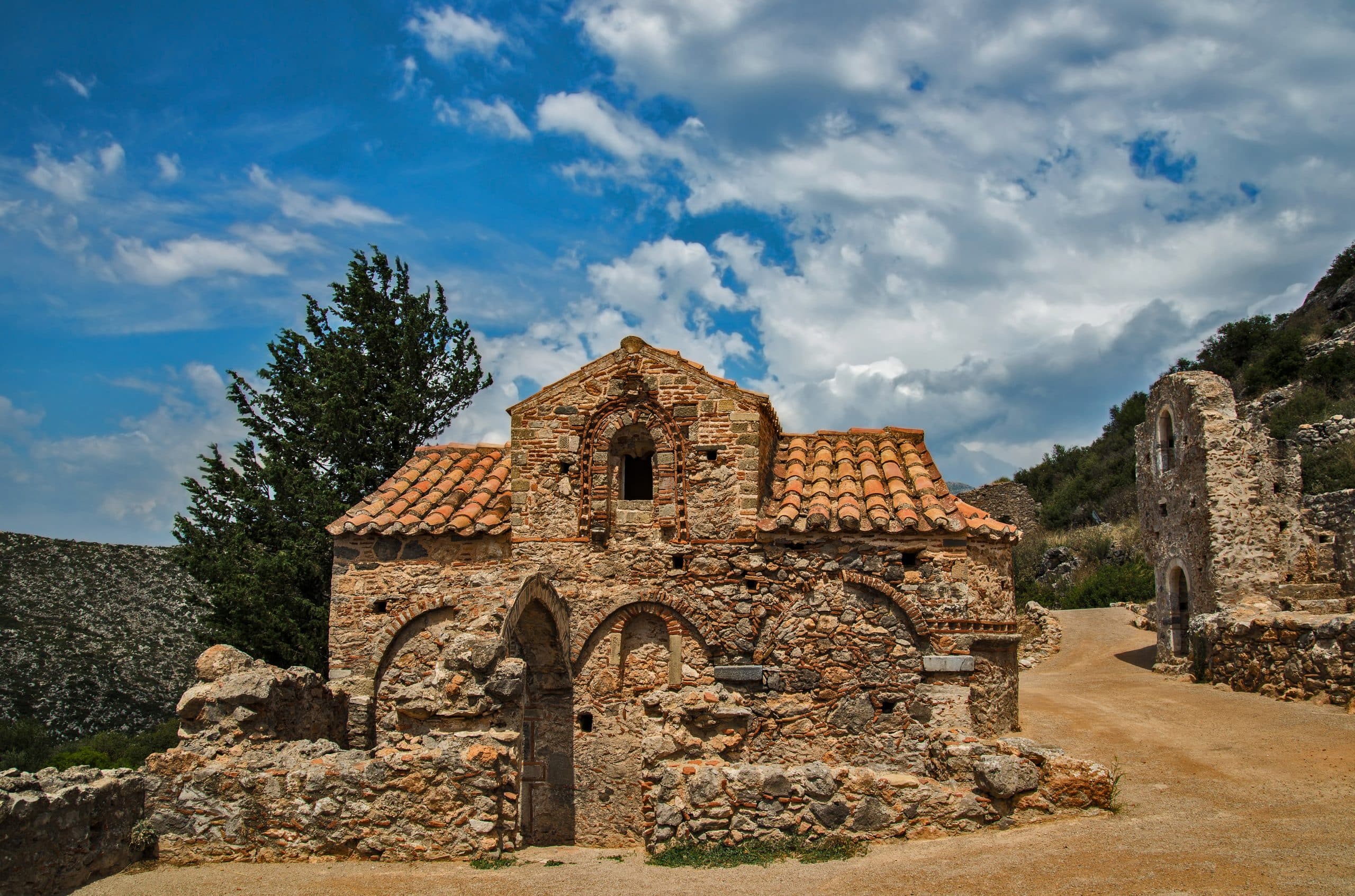
Geraki became a Frankish barony around 1209 under Guy de Nivelet, who built the castle; it was handed to the Byzantines in 1262, in the same deal that gave up Mystras and Monemvasia, and was later abandoned as the population moved down to the modern village.
What survives sits on Palaiokastro hill, two kilometres east of the modern village: the castle on the summit, with its circuit of walls and the church of Agios Georgios, and the medieval settlement on the slopes below — more than forty secular buildings and eight frescoed churches, seven of them open to visitors. Modern Geraki has several Byzantine churches of its own. The site is free and almost always empty, but it is staffed only on weekday mornings, 08:30–15:30; call the Ephorate of Antiquities of Laconia in Sparta the day before to make sure the guard is on. The frescoes are some of the better minor Byzantine paintings outside Mystras. Pair Geraki with Mystras (45 min west) for a full medieval-Laconia day — Geraki in the morning, Mystras in the afternoon — or detour from a Monemvasia–Sparta drive.
A Geraki morning as part of a medieval-Laconia day.
From a Sparta base, forty-five minutes east on small roads through the Eurotas valley. The site opens at 08:30 on weekdays and is free; call the Ephorate of Antiquities in Sparta the day before to make sure the guard is on.
Two hours walking the ruins — more than forty secular buildings and eight frescoed churches, seven of them open. Morning light through the small windows, the Eurotas plain below.
Down in the village — coffee on the shaded square, and the village's own Byzantine churches if the morning has room.
Fifty minutes west, back across the valley, Taygetos filling the windscreen.
Chromata in Pikoulianika, the hamlet five minutes above Mystras village, for the slow lunch.
The standard Mystras visit, top gate to bottom, in the softer afternoon light (see the Mystras page); the site is open until 20:00 in summer. Dinner on the Sparta plateia at 21:00.
Within an hour.
Below the castle hill, two kilometres west — cafés and tavernas on a shaded square, pensions and rooms to let, and several Byzantine churches of its own. The base for any visit.
Forty-five minutes west — the natural pairing for a full medieval-Laconia day. Detail on the Sparta and Mystras pages.
An hour and a quarter south-east — easy detour from the Sparta–Monemvasia drive. Detail on the Monemvasia page.
Twenty-five minutes south-west — a cave monastery cut into the wall of the Eurotas gorge, frescoes dated 1201; the interior only by arrangement with the Vrontamas priest. Niche; for the curious.
Thirty minutes south — the market town of the lower Eurotas plain, not on the sea; the nearest beach is Trinisa, twenty minutes further.
Tell us a little about the trip you want — pace, who's coming, how you'd like to spend your mornings. We'll build the days.