The hill-city of the late Byzantines, abandoned after 1834 — ghost streets, frescoed chapels, the Despot’s Palace looming above. Six hundred years of empire on a single slope.
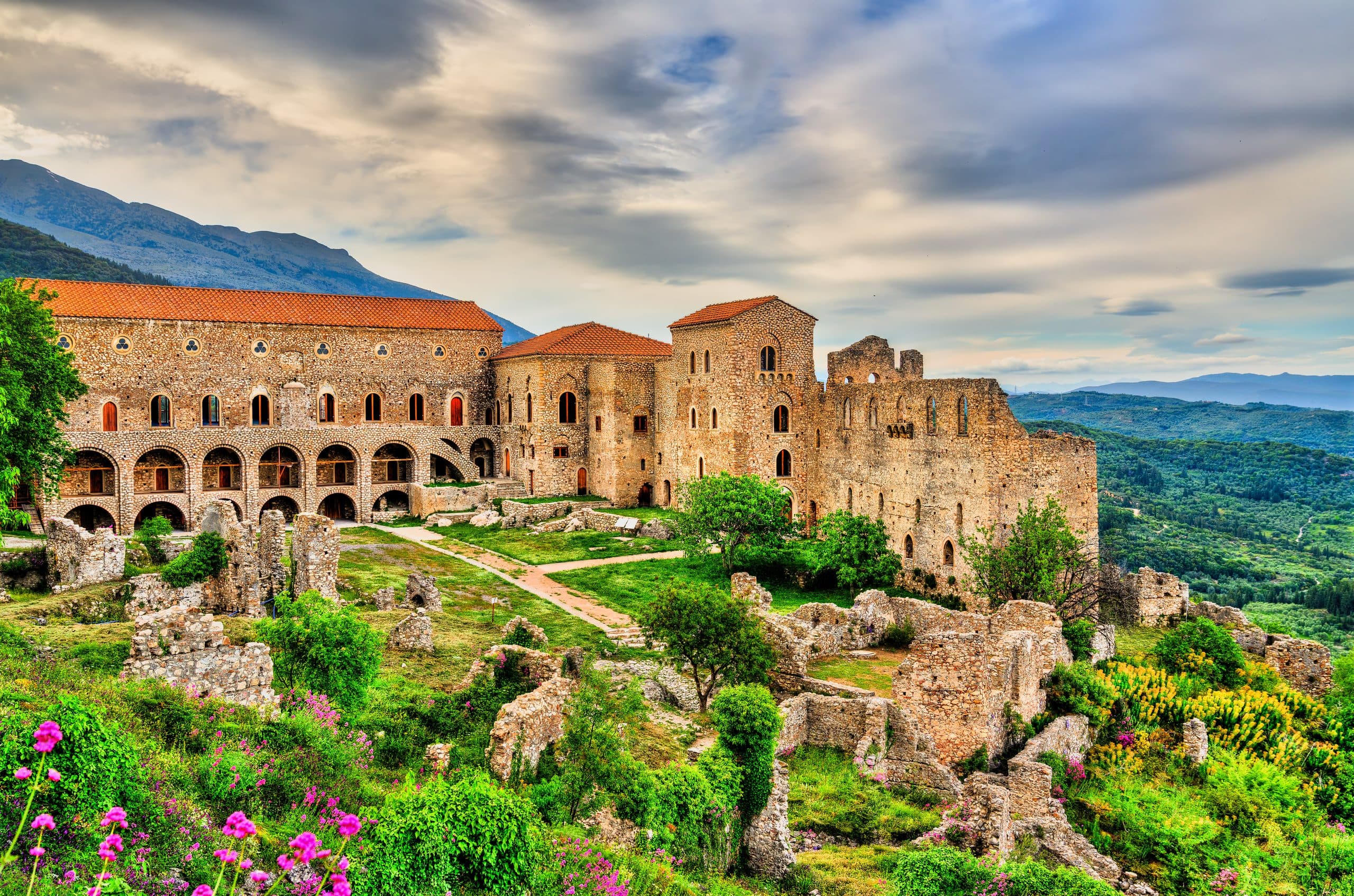
Mystras is the most complete late-Byzantine site in Greece — not a single monument but an entire fortified hill-city, with ten frescoed churches, the Despot’s Palace, monasteries, mansions and 250 ruined houses spread across a steep south-facing slope of the Taygetos.
Founded in 1249 by the Frankish prince William II Villehardouin, taken back by the Byzantines in 1262, capital of the Despotate of the Morea from 1349 until the Ottoman conquest of 1460. After 1460 it slowly emptied; most residents moved down to the new town of Sparta after 1834, and the last left in 1953, when the state expropriated the site. What survives is a UNESCO site of two parts: the Lower Town (Kato Chora) with the Metropolis, the Pantanassa monastery (still inhabited by nuns), and Perivleptos church (frescoes among the best in Greece); and the Upper Town (Ano Chora) with the Despot’s Palace and, at the summit, the Frankish castle. Two gates: most visitors enter at the lower one and walk uphill, but if you have two cars or a driver, dropping at the upper gate and walking down is much easier in summer heat. Allow three hours; serious medievalists allow a full day. Pair the visit with a Mystras village taverna lunch and an afternoon swim back at Sparta or Gythio.
A Mystras half-day, done before the heat.
Ten minutes from Sparta, twenty from a Eurotas-valley hotel. Up through Mystras village to the upper gate.
Be at the upper gate at 08:00 (08:30 from November to March). Empty for the first hour; cool. Walk to the Despot's Palace — which opens at 11:00 on Tuesdays — then up to the Frankish castle.
Past Pantanassa monastery (still inhabited by nuns, and open), into Perivleptos church for the frescoes, on down to the Metropolis.
Three hours of slow walking. By the time you exit, the buses are arriving — your timing was perfect.
Chromata in Pikoulianika, the hamlet five minutes above Mystras village — slow-roast pork, gigantes beans, bulk wine, retsina if you're brave.
Ten minutes east — the acropolis on the northern edge of the modern town: the Roman theatre, the temple of Athena Chalkioikos, olive groves. Free; an hour. The town's archaeological museum is closed for renovation.
Either back to a base hotel for swim/siesta, or onward — Monemvasia is two hours, Gythio fifty minutes.
Within thirty minutes.
The modern village below the site — tavernas, cafés, a handful of guesthouses. The standard lunch stop.
Ten minutes east on the plain — the modern town and the acropolis of ancient Sparta. Detail on the Sparta page.
Mystras sits at the foot of Taygetos. Hiking trails climb directly from the village. Detail on the Taygetos page.
Forty-five minutes east — the smaller, quieter Byzantine ghost-village. The connoisseur's pairing with Mystras.
Fifty minutes south — the old port town. Detail on the Gythio page.
Tell us a little about the trip you want — pace, who's coming, how you'd like to spend your mornings. We'll build the days.